
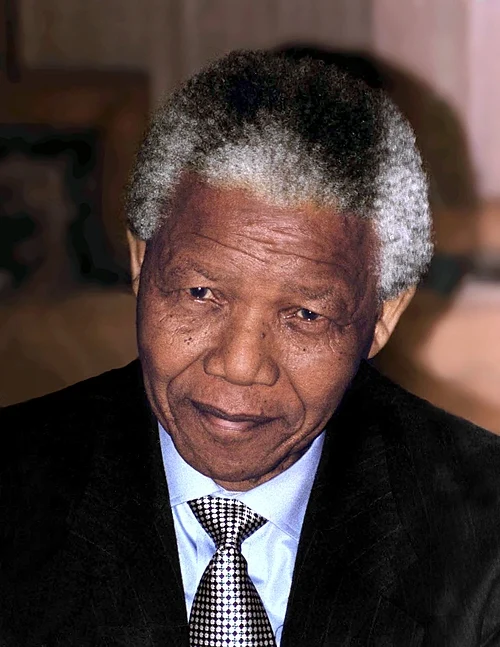
Nelson Rolihlahla Mandela
Also known as: Madiba · Tata · The Father of the Nation · Number 46664
Anti-Apartheid Revolutionary - President of South Africa - Nobel Peace Prize Laureate
Map
Timeline
Born in Mvezo
Born on July 18 in the small village of Mvezo in the Eastern Cape, to the royal Madiba clan of the Xhosa-speaking Thembu people.
Joins the ANC
Joined the African National Congress and co-founded the ANC Youth League, pushing the organization toward more direct anti-apartheid action.
Apartheid Begins
The National Party won power and institutionalized apartheid, triggering a new phase of Mandela's activism.
Defiance Campaign
Co-led the Defiance Campaign against unjust laws — the largest non-violent resistance campaign in South African history to that point.
Sharpeville and the ANC Ban
After police killed 69 protesters at Sharpeville and the ANC was banned, Mandela concluded that peaceful protest alone was insufficient and formed MK, the ANC's armed wing.
Arrested
Arrested and initially jailed for incitement and leaving the country illegally; charges were expanded at the Rivonia Trial to sabotage.
Sentenced to Life — Robben Island
Sentenced to life imprisonment at the Rivonia Trial and sent to the maximum security prison on Robben Island, where he would spend 18 years.
Transferred to Pollsmoor Prison
Moved from Robben Island to Pollsmoor Prison in Cape Town, where conditions were marginally better but he remained isolated from the general prisoner population.
Refuses Conditional Release
Refused an offer of conditional release from President Botha, stating he would not be freed while the ANC remained banned and apartheid intact.
Moved to Victor Verster Prison
Transferred to Victor Verster Prison near Paarl, where he was housed in a private cottage — the first step in secret government negotiations for his release.
Released from Prison
Released on February 11, 1990 after 27 years, following sustained national and international pressure; walked out hand-in-hand with Winnie Mandela.
Nobel Peace Prize
Awarded the Nobel Peace Prize jointly with President F.W. de Klerk for their joint work in the peaceful dismantling of apartheid.
First Democratic President
Elected as South Africa's first Black president in the country's first fully democratic election on April 27 — known as Freedom Day.
Dies in Johannesburg
Died on December 5 at his home in Johannesburg, surrounded by family, at the age of 95.
Family Tree
Parents
Gadla Henry Mphakanyiswa Mandela
Father
c. 1880-1930
Nosekeni Fanny
Mother
c. 1894-1968
Subject & Siblings
Nelson Mandela
Self
1918 - 2013
Evelyn Ntoko Mase
Wife I
1922-2004
Winnie Madikizela-Mandela
Wife II
1936-2018
Graça Machel
Wife III
1945-present
Spouses
Thembi Mandela
Son
1945-1969
Makgatho Mandela
Son
1950-2005
Makaziwe Mandela
Daughter
1947-present
Zenani Mandela
Daughter
1959-present
Zindziswa Mandela
Daughter
1960-2020
Key Contributions
-
Unlock End of Apartheid
Negotiated the peaceful dismantling of South Africa's apartheid system, ending decades of institutionalized racial segregation and oppression.
-
Clock 27 Years in Prison
Endured 27 years of imprisonment — including hard labor on Robben Island — without abandoning his principles or accepting conditional release.
-
Flag First Democratic President
Became South Africa's first Black president following the country's first fully free election in April 1994, serving one term.
-
Heart Reconciliation over Revenge
Championed a policy of national reconciliation rather than revenge, supporting the Truth and Reconciliation Commission under Archbishop Tutu.
Fun Facts
Tag
His Name Means Troublemaker
Mandela's birth name Rolihlahla means "pulling the branch of a tree" — or colloquially "troublemaker" — in Xhosa. His teacher gave him the English name Nelson.
Dumbbell
Was a Competitive Boxer
Mandela was an avid amateur boxer in his youth, using the sport to stay fit and relieve stress throughout his legal career in Johannesburg.
Letters from Robben Island
Mandela wrote hundreds of letters during his imprisonment — heavily censored by prison authorities — to Winnie, family, and colleagues. Many survive and have been published in The Prison Letters of Nelson Mandela.
Recurring pulmonary complications — lung infection linked to tuberculosis contracted during imprisonment
Location
Location: Houghton Estate, Johannesburg, South Africa
Burial: Qunu, Eastern Cape, South Africa
Those Present
-
Graça Machel
Wife who was at Mandela's bedside at the moment of his death.
Impact
Mandela's death triggered a global outpouring of grief. His memorial service at FNB Stadium in Johannesburg drew over 100 heads of state and government, one of the largest gatherings of world leaders in history. He is remembered worldwide as a symbol of dignity, perseverance, forgiveness, and the transformative power of peaceful political change.
See Also
Other Figures
Related Sites
"It always seems impossible until it's done."
Attributed to Nelson Mandela, widely cited